Armadillidium maculatum; identification confidence high from the bold transverse banding.
Isopod Culture
Zebra Isopod
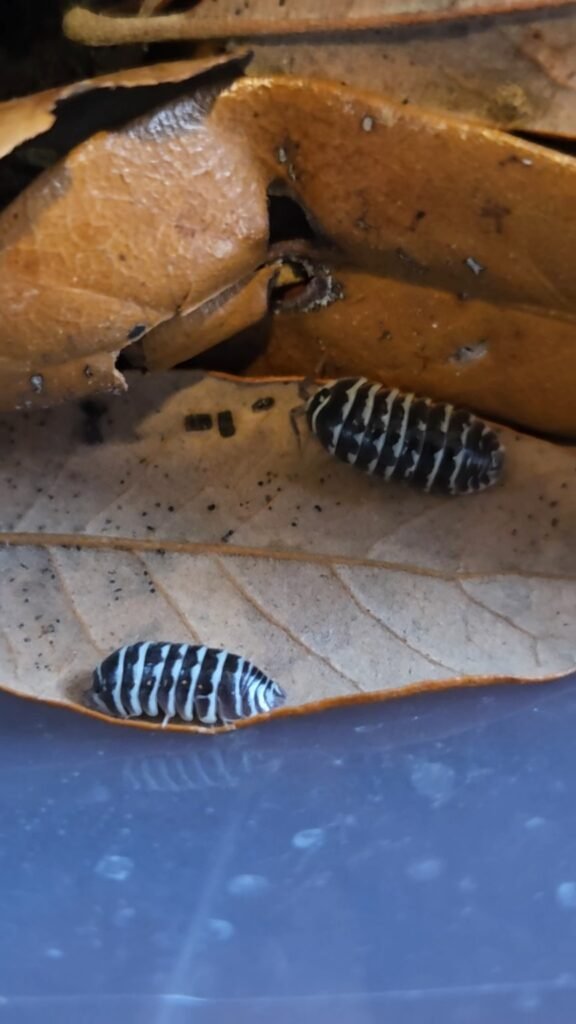 Laurarium photo
 Bold cream/white transverse bands over a dark black-brown body.
Published biological information is separated below from Laurarium-specific observations and collection records.
Collection record
Culture statusNot recorded
AvailabilityNot recorded
Culture countNot recorded
ID confidenceHigh
Save or compare
Explore this profile
Published biology & practical care
Field-guide notes
Mediterranean/European Armadillidium species with established introduced populations elsewhere.
Approximately 15–20 mm.
Distinctive cream-to-white transverse bands across a dark brown-to-black body.
Surface-active for an Armadillidium, especially at feeding time; readily conglobates when disturbed.
68–78 °F (20–26 °C); avoid prolonged high heat.
Moderate moisture gradient: one reliably moist refuge and a substantially drier ventilated area.
Organic soil with decayed hardwood, heavy leaf litter, bark, and a moist moss/refuge zone.
Leaf litter and decayed wood as staples with vegetable and prepared-food supplements.
Provide a continuous calcium source; offer modest supplemental protein.
Steady once established under stable moisture and food availability.
Moderate.
Useful decomposer and cleanup-crew species when a backup culture is maintained.
Beginner.
The species is named for its zebra-like transverse dorsal bands.
Laurarium observations
Our colony notes
No Laurarium husbandry observations have been published for this culture yet.
Laurarium Colony Pulse
Current culture status
Last checked: September 19, 2026
Healthy with good moisture, adults plus babies, and visible springtails.
Long🟢 StrongHealthy population with babies and springtails visible.
Next-check focus: Maintain current moisture and feeding routine.