
Hobby-trade Nesodillo culture recognized by its contrasting red/orange patterning.
Isopod Culture
Red Tiger
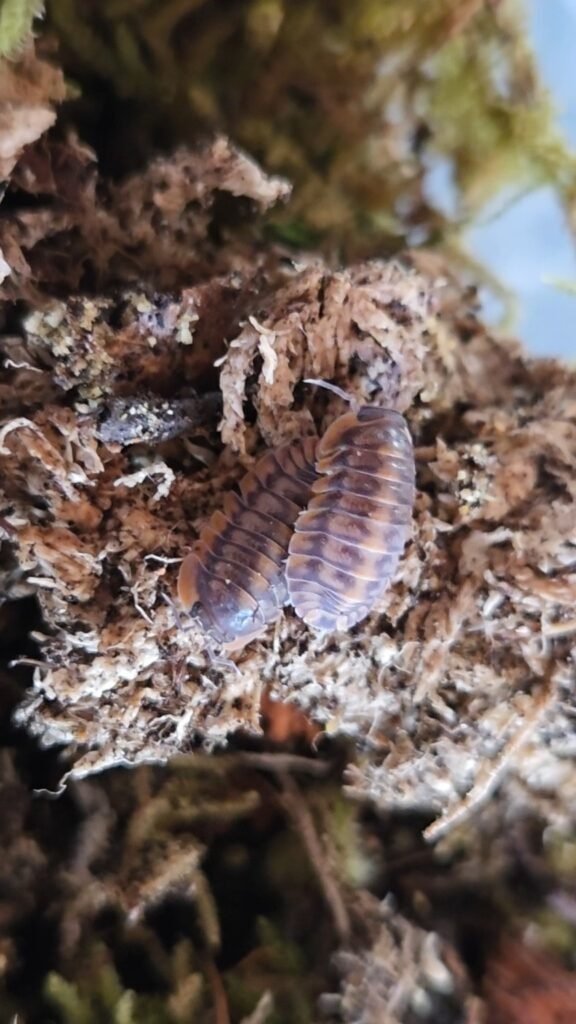 Laurarium photo
 A distinctive red specialty culture.
Published biological information is separated below from Laurarium-specific observations and collection records.
Collection record
Culture statusNot recorded
AvailabilityNot recorded
Culture countNot recorded
ID confidenceNot recorded
Source-stock provenance
Collection origin
SourceJungle Fever
LocationHuntertown, IN
AcquiredApril 2026
Founding quantity10
This records Laurarium’s source stock/acquisition history. It is not a biological parent-pair or genetic-lineage claim.
Save or compare
Explore this profile
Published biology & practical care
Field-guide notes
Hobby-trade locality/species designation; formal species identity is not treated as resolved here.
Small-to-medium terrestrial isopod; exact adult size is retained as a husbandry-record field until confirmed from Laurarium measurements.
Warm red to orange body patterning with darker contrasting areas.
Mostly surface-active around cover and feeding areas when conditions are favorable.
70–78 °F (21–26 °C) practical culture range; avoid prolonged overheating.
Maintain a clear moist-to-drier gradient with humid refuges rather than uniformly wet substrate.
Deep organic isopod substrate with decayed hardwood, leaf litter, and moisture-holding material.
Decaying leaves and wood as staples, supplemented with vegetables and formulated invertebrate foods.
Keep calcium available; offer modest supplemental protein rather than making protein the staple.
Maintain stable moisture, food, and cover. Avoid repeatedly disturbing brood areas.
Moderate; verify against Laurarium colony records before publishing a numeric rate.
Useful decomposer, but maintain a backup culture before using valuable stock as a cleanup crew.
Intermediate.
“Red Tiger” is a hobby name and should not be presented as a formally described species.
Laurarium photography
Culture gallery
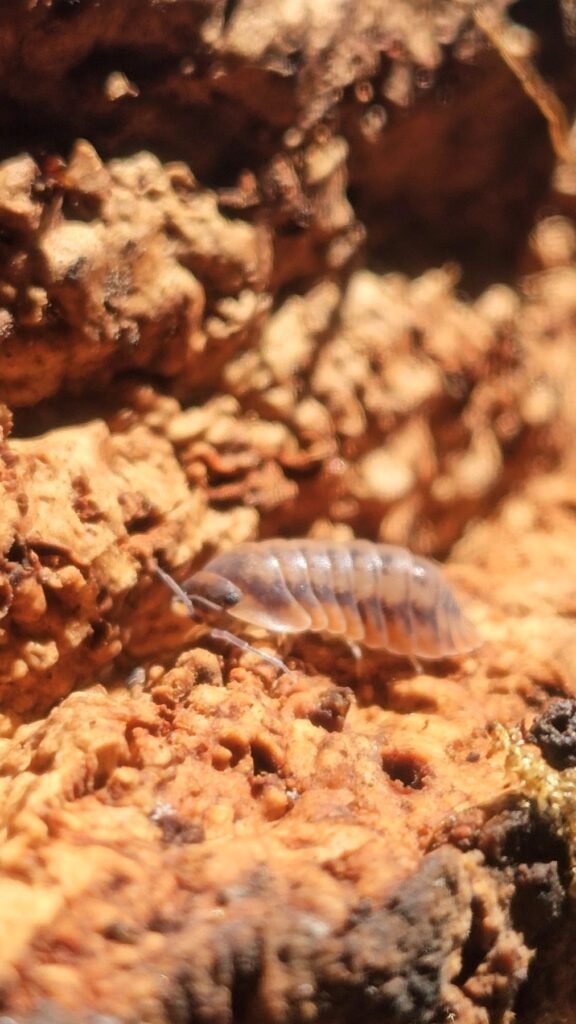
Laurarium observations
Our colony notes
No Laurarium husbandry observations have been published for this culture yet.
Laurarium Colony Pulse
Current culture status
Last checked: September 19, 2026
No isopods were seen in the long bin and only about one or two were seen in the small bin.
Long🔴 PriorityNo isopods seen; an earlier escape was considered possible.
Small🔴 PriorityOnly about 1–2 isopods visible; set aside for verification.
Next-check focus: Verify whether a viable population remains and inspect enclosure security because an earlier escape was possible.