Hobby-trade Cubaris culture retained under the Laurarium collection name “Red Panda”; no formal species-level identification is asserted here.
Isopod Culture
Red Panda
 Laurarium photo
 A specialty Cubaris hobby culture maintained in the Laurarium collection.
Published biological information is separated below from Laurarium-specific observations and collection records.
Collection record
Culture statusNot recorded
AvailabilityNot recorded
Culture countNot recorded
ID confidenceNot recorded
Source-stock provenance
Collection origin
SourceJungle Fever
LocationHuntertown, IN
AcquiredApril 2026
Founding quantity10
This records Laurarium’s source stock/acquisition history. It is not a biological parent-pair or genetic-lineage claim.
Save or compare
Explore this profile
Published biology & practical care
Field-guide notes
Hobby-trade Cubaris lineage; formal locality/species identity is not treated as resolved.
Small-to-medium Cubaris-type isopod; verify adult measurements from the Laurarium colony before publishing a precise size.
Contrasting warm red/orange and pale patterning associated with the hobby line.
Tends to use humid cover, cork, wood, and leaf-litter interfaces.
70–78 °F (21–26 °C) practical culture range.
Humid refuge plus a ventilated drier zone; do not keep the entire culture waterlogged.
Organic soil/wood substrate with rotten hardwood and a persistent leaf-litter layer.
Leaf litter and decayed wood first; supplement vegetables and prepared invert foods.
Keep calcium continuously available and supplement protein in small portions.
Stable warmth, humidity gradient, cover, and mature substrate favor steady colony establishment.
Slow-to-moderate; confirm with Laurarium records before publishing a colony-growth claim.
Better maintained first as a dedicated culture; use surplus animals for bioactive work only when colony size supports it.
Intermediate.
The name is a hobby designation, not a formally described species name.
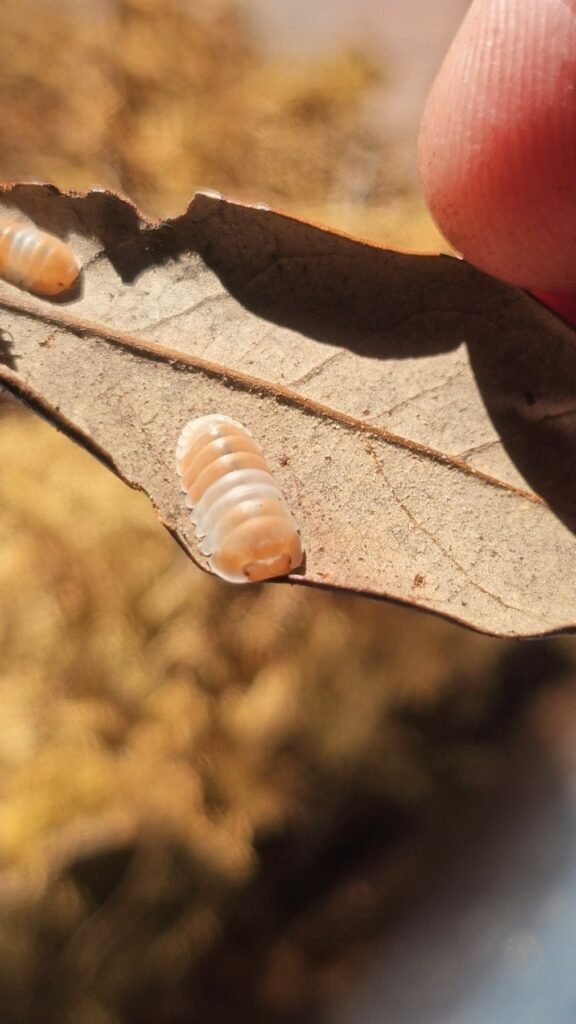
Laurarium photography
Culture gallery
Laurarium observations
Our colony notes
No Laurarium husbandry observations have been published for this culture yet.
Laurarium Colony Pulse
Current culture status
Last checked: September 19, 2026
The long bin was moist and sustaining; the small bin was dry but doing very well.
Long🟡 Stable / RebuildingMedium/sustaining population.
Small🟢 StrongColony was doing very well despite the dry substrate.
Next-check focus: Protect the strong small-bin population while keeping both bins inside a safer moisture range.