
Hobby-trade Nesodillo culture recognized by its contrasting red/orange patterning.
Isopod Culture
Red Tiger
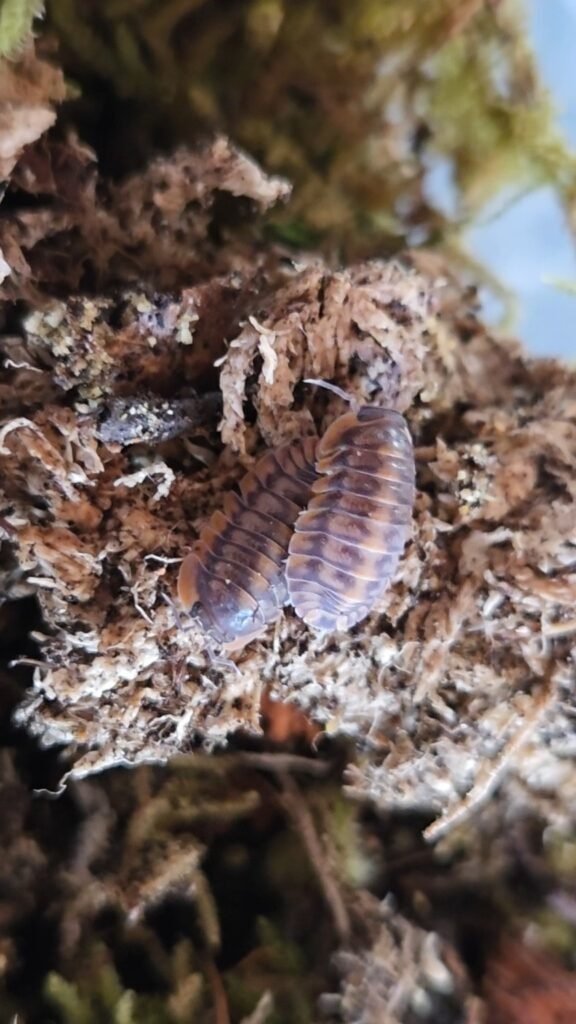 Laurarium photo
 A distinctive red specialty culture.
Published biological information is separated below from Laurarium-specific observations and collection records.
Collection record
Culture statusNot recorded
AvailabilityNot recorded
Culture countNot recorded
ID confidenceNot recorded
Source-stock provenance
Collection origin
SourceJungle Fever
LocationHuntertown, IN
AcquiredApril 2026
Founding quantity10
This records Laurarium’s source stock/acquisition history. It is not a biological parent-pair or genetic-lineage claim.
Save or compare
Explore this profile
Published biology & practical care
Field-guide notes
Hobby-trade locality/species designation; formal species identity is not treated as resolved here.
Small-to-medium terrestrial isopod; exact adult size is retained as a husbandry-record field until confirmed from Laurarium measurements.
Warm red to orange body patterning with darker contrasting areas.
Mostly surface-active around cover and feeding areas when conditions are favorable.
70–78 °F (21–26 °C) practical culture range; avoid prolonged overheating.
Maintain a clear moist-to-drier gradient with humid refuges rather than uniformly wet substrate.
Deep organic isopod substrate with decayed hardwood, leaf litter, and moisture-holding material.
Decaying leaves and wood as staples, supplemented with vegetables and formulated invertebrate foods.
Keep calcium available; offer modest supplemental protein rather than making protein the staple.
Maintain stable moisture, food, and cover. Avoid repeatedly disturbing brood areas.
Moderate; verify against Laurarium colony records before publishing a numeric rate.
Useful decomposer, but maintain a backup culture before using valuable stock as a cleanup crew.
Intermediate.
“Red Tiger” is a hobby name and should not be presented as a formally described species.
Laurarium observations
Our colony notes
No Laurarium husbandry observations have been published for this culture yet.
Laurarium Colony Pulse
Current culture status
Last checked: September 19, 2026
No isopods were seen in the long bin and only about one or two were seen in the small bin.
Long🔴 PriorityNo isopods seen; an earlier escape was considered possible.
Small🔴 PriorityOnly about 1–2 isopods visible; set aside for verification.
Next-check focus: Verify whether a viable population remains and inspect enclosure security because an earlier escape was possible.